What Is a Permanent Deacon?
An ordained minister of Word, Liturgy, and Charity — the permanent deacon bridges the altar and the world, carrying the Church's mission into the heart of daily life.
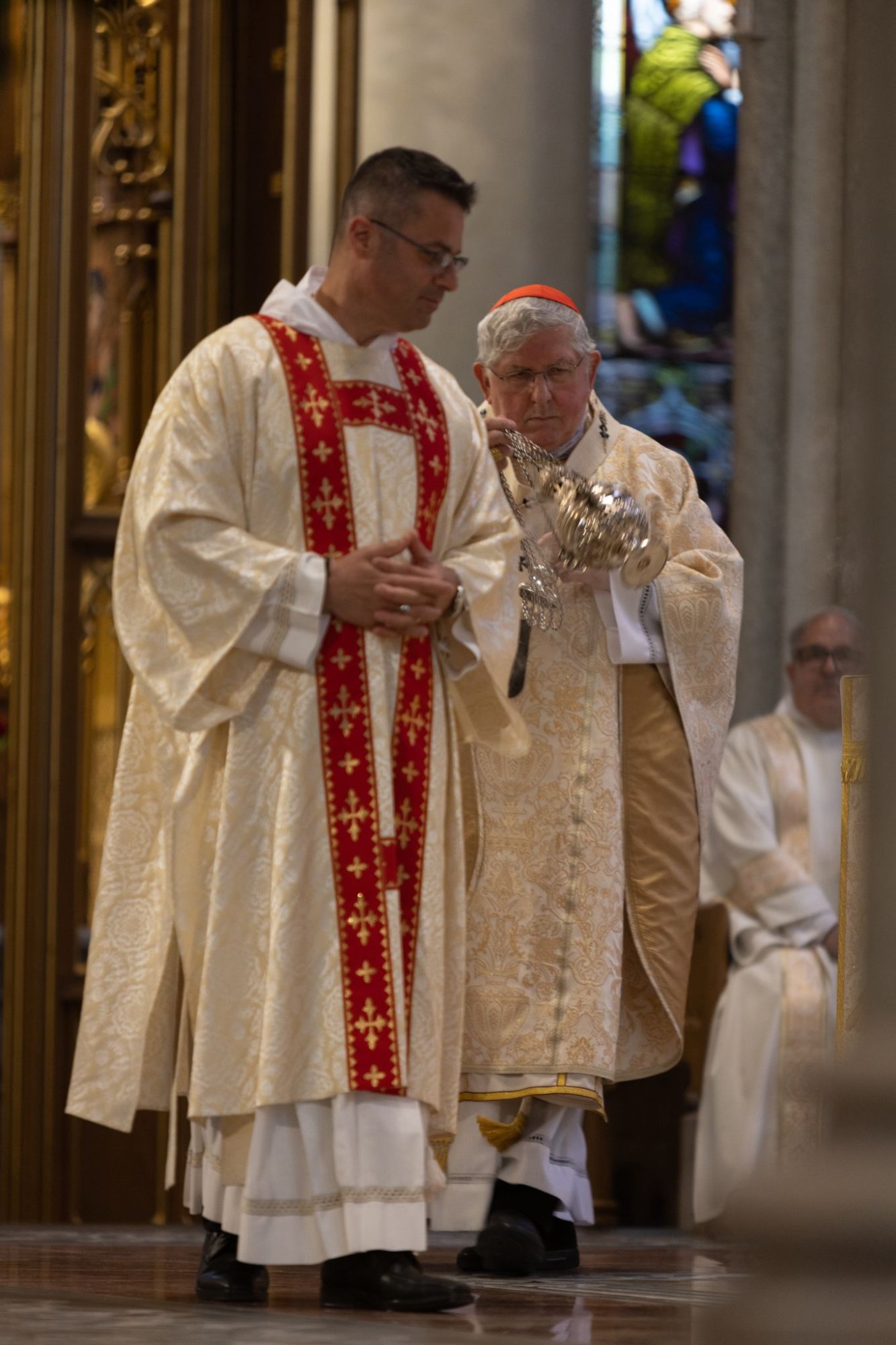
A Vocation Restored for Our Time
The permanent diaconate is an ordained ministry in the Catholic Church — one of the three degrees of Holy Orders alongside the priesthood and the episcopate. Restored by the Second Vatican Council in 1964 through the Constitution Lumen Gentium, the permanent diaconate returned to the Church a ministry that had flourished in the earliest centuries of Christianity.
Unlike transitional deacons — seminarians preparing for priestly ordination — permanent deacons embrace the diaconate as their lifelong vocation. They are ordained not as a step toward priesthood, but to serve the People of God as deacons for the rest of their lives.
Permanent deacons may be married men, typically over the age of 35, who continue in their professional careers while serving their parishes, hospitals, prisons, and communities. They undergo a rigorous formation process of four to five years before ordination.
The Institution of the Diaconate
The origin of the diaconate is found in the Acts of the Apostles, when the Twelve, faced with the growing needs of the early Church, called forth seven men to serve.
The apostles prayed over them and laid hands on them — an act the Church recognizes as the origin of the ordained diaconate. From its very first moment, the ministry was born from a practical need: to bridge the gap between the altar and the daily needs of God's people.
What Does a Deacon Do?
Every deacon is ordained to serve through three interconnected dimensions of ministry, each rooted in Christ's own example of humble service.
MINISTRY OF THE WORD
Deacons are ordained to proclaim the Gospel and break open the Word of God for the faithful. This ministry extends far beyond the liturgy into every dimension of life.
- Proclaim the Gospel at Mass
- Preach the homily
- Teach RCIA and sacramental preparation
- Lead Bible studies and parish education
- Prepare families for Baptism and Marriage
MINISTRY OF THE LITURGY
In the sacred liturgy, the deacon assists the presiding priest and serves as a bridge between the assembly and the altar.
- Assist at the Eucharistic liturgy
- Preside at Baptisms
- Witness and bless marriages
- Preside at funerals and wake services
- Lead Benediction and Communion services
MINISTRY OF CHARITY
The heart of the diaconate is diakonia — selfless service. The deacon is an icon of Christ the Servant.
- Minister to the sick, dying, and homebound
- Serve the poor and marginalized
- Visit the imprisoned
- Coordinate parish outreach and social justice
- Advocate for the dignity of every person
Permanent vs. Transitional Deacon
Both share the same sacrament of ordination, but the vocation and circumstances differ significantly.
| Permanent Deacon | Transitional Deacon | |
|---|---|---|
| Vocation | Ordained to the diaconate as a lifelong ministry | Ordained as a step toward priestly ordination |
| Marriage | May be married (ordained after marriage); celibate if unmarried | Celibate — preparing for priesthood |
| Age | Typically 35+ (married) or 25+ (unmarried) | Typically mid-to-late 20s |
| Formation | 4–5 year program alongside professional life | Part of seminary formation for priesthood |
| Career | Typically maintains a secular career | Full-time seminary and then priestly ministry |
| Duration | Remains a deacon permanently | Serves as deacon for ~6–12 months before priestly ordination |
| Sacrament | Both receive the same Sacrament of Holy Orders — ordination to the diaconate | |
How Does a Man Become a Deacon?
The formation process is rigorous and comprehensive — theological, spiritual, pastoral, and human.
Inquiry & Discernment
The journey begins with prayer and honest self-reflection. A man explores the call with his wife (if married), his pastor, and the diocesan director of the diaconate.
6–12 MonthsAspirant Year
Accepted aspirants begin a year of deeper discernment, spiritual direction, and introductory coursework. Psychological and background evaluations are completed.
~1 YearCandidacy & Academic Formation
Candidates begin intensive study in Scripture, theology, Canon Law, homiletics, Church history, and pastoral ministry. Formation includes spiritual direction, retreats, and supervised pastoral placements.
3–4 YearsRite of Admission & Ministries
Candidates are formally admitted as candidates for Holy Orders and instituted as Lectors and Acolytes — liturgical milestones on the journey toward ordination.
During FormationOrdination
The bishop ordains the candidate through the laying on of hands and the prayer of consecration. The new deacon is vested with the dalmatic and stole, receives the Book of the Gospels, and is sent forth to serve.
A Lifetime of ServiceWhat the Church Teaches
"At a lower level of the hierarchy are deacons, upon whom hands are imposed 'not unto the priesthood, but unto a ministry of service.' At an ordination to the diaconate, only the bishop lays hands on the candidate, thus signifying the deacon's special attachment to the bishop in the tasks of his 'diakonia.'"— Catechism of the Catholic Church, §1569
The Catechism further teaches that deacons share in Christ's mission and grace in a special way. The sacrament of Holy Orders marks them with an imprint, or "character," which cannot be removed and configures them to Christ, who made himself the servant of all.
"It is the task of deacons to assist the bishop and priests in the celebration of the divine mysteries, above all the Eucharist, in the distribution of Holy Communion, in assisting at and blessing marriages, in the proclamation of the Gospel and preaching, in presiding over funerals, and in dedicating themselves to the various ministries of charity."— Catechism of the Catholic Church, §1570
Since the restoration of the permanent diaconate following Vatican II, the Church has emphasized that the diaconate is not merely a functional role but a true and proper sacramental vocation — a way of life configured to Christ the Servant.
Frequently Asked Questions
No. The celebration of the Eucharist is reserved to the ordained priesthood. A deacon assists the priest during Mass — proclaiming the Gospel, preaching the homily, preparing the altar, and distributing Holy Communion — but he cannot consecrate the Eucharist or preside at Mass.
However, a deacon may preside at a Communion Service in the absence of a priest.
Yes — and the vast majority of permanent deacons are married men. A man must be married before ordination if he wishes to serve as a married deacon. His wife's consent is required, and she participates in the formation process.
If a married deacon's wife dies, he is generally not permitted to remarry unless he receives a special dispensation from the Holy See. Unmarried men ordained as permanent deacons commit to a life of celibacy.
A deacon is the ordinary minister of Baptism and may also witness and bless marriages. He distributes Holy Communion and may conduct funeral liturgies, Benediction of the Blessed Sacrament, and various blessings.
A deacon cannot celebrate Mass, hear confessions, administer the Anointing of the Sick, or celebrate the Sacrament of Confirmation.
A deacon is formally addressed as "Deacon [First Name]" or "Deacon [Last Name]." In writing, the proper form is "The Reverend Mr. [Full Name]" or "Deacon [Full Name]." Unlike priests, deacons are not addressed as "Father."
The distinctive vestment of the deacon is the dalmatic, a wide-sleeved outer garment worn over the alb and stole. The deacon's stole is worn diagonally — draped over the left shoulder and fastened at the right hip — distinguishing it from the priest's stole, which hangs straight down.
The deacon also wears an alb and a cincture. Outside of Mass, a deacon typically wears an alb and stole when presiding at other services.
It is technically possible but extremely rare. A permanent deacon could be considered for priestly ordination if he is unmarried and the bishop discerns such a call. However, the permanent diaconate has its own sacramental identity and should be embraced fully for what it is — not a lesser form of priesthood or a stepping stone.
Yes. The institution of the diaconate is traditionally linked to Acts 6:1–6 (RSV-CE), where the Apostles chose seven men “of good repute, full of the Spirit and of wisdom” to serve the community. St. Paul also addresses deacons in 1 Timothy 3:8–13, and commends “our sister Phoebe, a deaconess of the church at Cenchre-ae” in Romans 16:1. All scripture on this site is quoted from the Revised Standard Version, Catholic Edition (RSV-CE), a scholarly Catholic translation widely used in formation and theological study.
The permanent diaconate flourished in the early Church but gradually declined in the West during the Middle Ages, becoming only a transitional step toward priesthood. For roughly a thousand years, it was not practiced in the Latin Rite.
The Second Vatican Council authorized its restoration in 1964 through Lumen Gentium §29. Pope Paul VI implemented this in 1967 with Sacrum Diaconatus Ordinem.
Continue Exploring
Discover the rich history of the diaconate, meet the saints who served as deacons, or begin your own journey of discernment.